
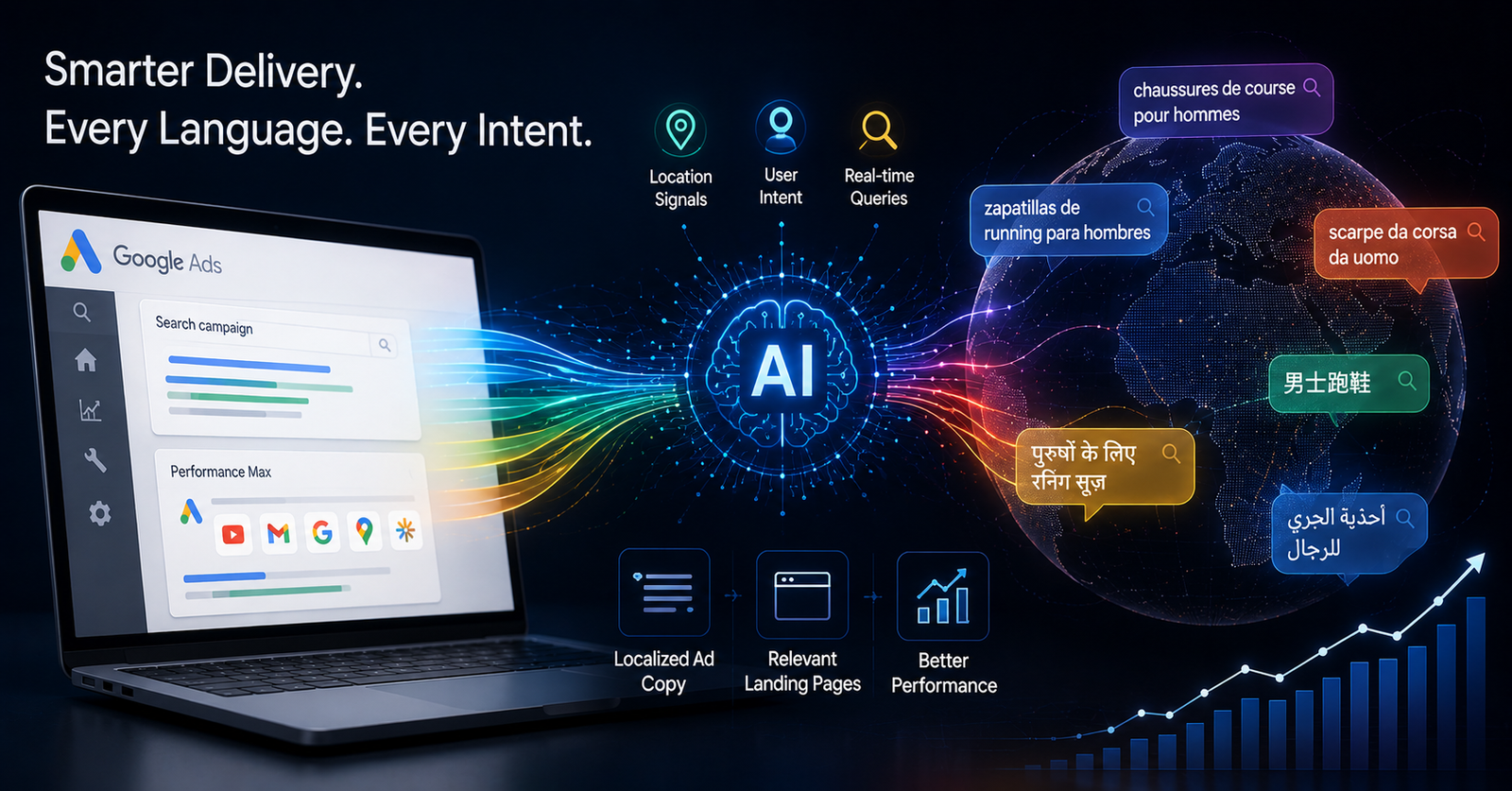
Google Ads is introducing a significant structural adjustment to how Search and Performance Max campaigns handle multilingual traffic. By sunsetting standalone language targeting settings, the platform is transitioning campaign delivery toward machine-learning models that evaluate user intent, location signals, and real-time query mechanics. For brands operating in multilingual markets or international territories, this update alters how accounts must structure their ad copy, keyword themes, and landing pages.
Understanding the Shift in Google Ads Language Settings
Historically, advertisers manually selected targeted languages at the campaign level, instructing Google to serve ads only to users whose browser interface settings or system preferences matched that criteria. However, this manual approach often restricted reach in multilingual regions where users navigate interfaces in English while querying in other languages, or vice versa.
Under the revised framework, Google will automatically match ad assets and search queries based on the linguistic context of the search query itself and accompanying behavioral signals. Advertisers investing in sponsored advertising campaigns will no longer rely on arbitrary campaign-level language checkboxes to gate their audience delivery.
Why Automated Language Alignment Matters for Search
As search engines shift away from rigid settings toward semantic intent, ad networks require cleaner contextual signals directly within the account structure. Much like recent changes to bid automation detailed in our guide on Google Smart Bidding target audits, this shift places greater responsibility on creative assets and audience signals rather than technical platform toggles.
Actionable Steps to Prepare Your PPC Accounts
To ensure ad spend efficiency remains high through this transition, marketing teams and business owners should proactively review their campaign configurations. Because the automated system relies heavily on creative signals, ad group structure must strictly separate distinct languages.
1. Separate Ad Groups by Language and Dialect
If your business serves customers in multiple languages within the same geographic territory, organize ad groups around distinct language themes. Combining multiple languages within a single ad group creates mixed signals that confuse algorithmic matching and hurt ad relevance scores.
2. Ensure Direct Landing Page Symmetry
Ad copy must direct users to dedicated, localized landing pages written in the identical language of the ad. If an automated search match serves a localized ad headline that sends the prospect to an unlocalized English page, bounce rates will spike and conversion tracking will degrade.
3. Audit Negative Keywords Regularly
Because Google will match queries dynamically across dialects, negative keyword lists must be expanded to exclude irrelevant search terms in multiple regional variations. Proactive search term auditing prevents non-converting foreign queries from absorbing ad budget in broad-match environments.
Further Reading: searchenginejournal.com
Frequently Asked Questions
When does the Google Ads language targeting change take effect?
The transition begins rolling out across Google Search and Performance Max campaigns starting in September 2026.
Will my existing multilingual Search campaigns stop running?
No, existing campaigns will continue serving, but Google will gradually ignore manual language settings in favor of automated query-level matching.
How can I prevent my ads from showing for unwanted languages?
Use tightly grouped keywords in your intended language, localized ad copy, and robust negative keyword lists to prevent irrelevant cross-language impressions.
Does this update affect Performance Max campaigns as well as Search?
Yes, both Search and Performance Max campaigns will adopt automated language matching based on asset language and user query context.
Ready to put this into practice? Spree Marketing helps businesses in the US, UK, and India turn strategies like this into measurable growth.